
As time marches on, information pertaining to societies and events vary, actual records are often lost or misplaced and when people who were involved are no longer with us, we begin to realize the value of our local history and heritage. The Riceville Agricultural society is no exception.
According to the Tweedsmuir Book (a local history compiled with the Women’s Institute) the South Plantagenet Agricultural Society, as it was originally known, was founded in 1865. The History of the Counties Argenteuil, Quebec, Prescott, Ontario indicates 1869. The Ontario Association of Agricultural Societies recognizes 1867 as the official date.
It is thought the first fairs were held on the main street/road which ran through the village. In later years, the fair was held just east of the village, on top of the hill, across from the current site (1991). In 1926, the society purchased the current site from Henry Rowe for the sum of $600.00. Signing officers on the deed were: George A. Ryan, president, and Jim Ryan, secretary/treasurer.
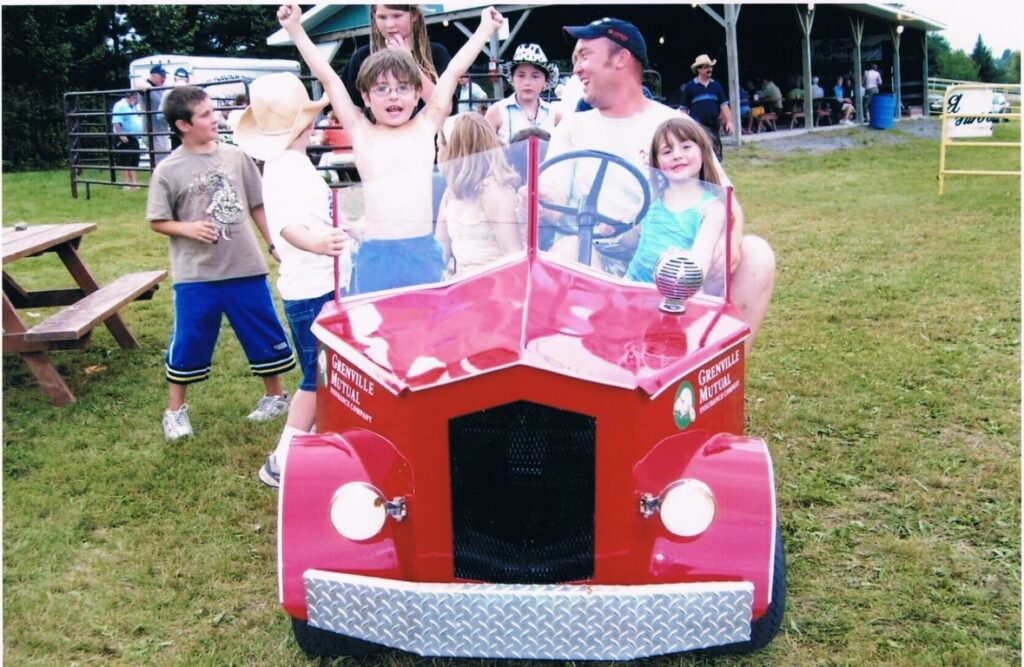
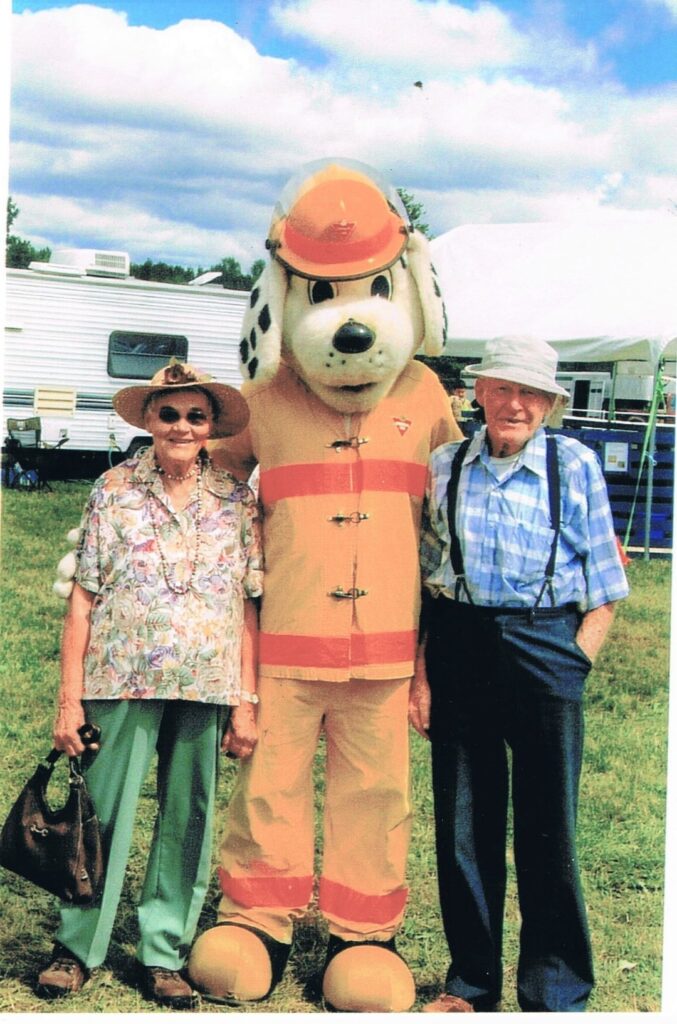
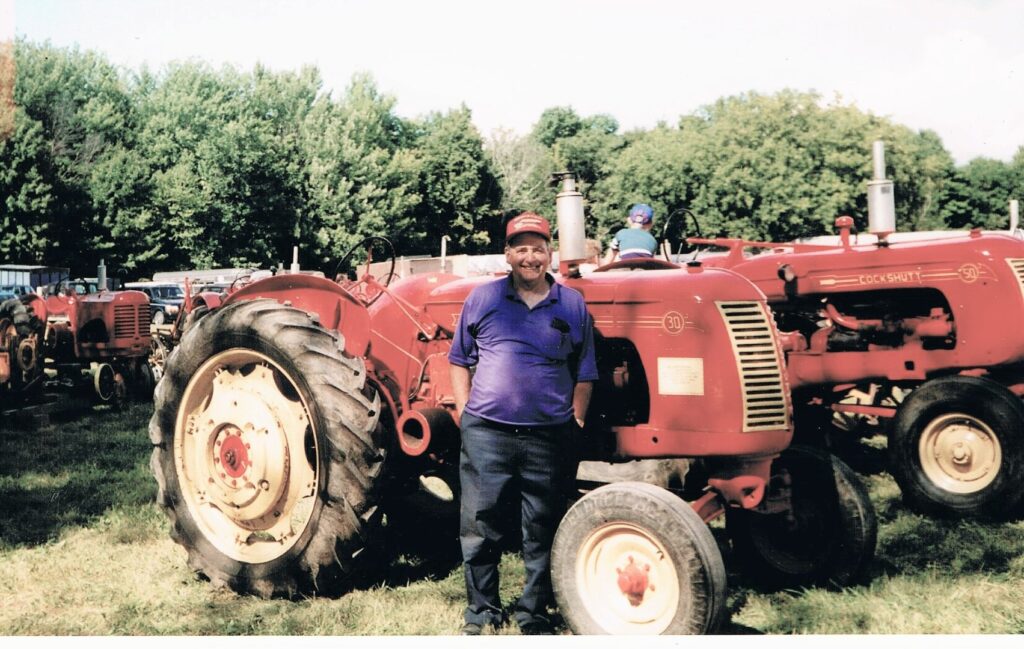
On behalf of the Riceville Agricultural Society, it is my honor to welcome you to the 159th annual Riceville Fair! Although this is my first year as President, my journey with the Riceville Fair has been one filled with rewarding experiences.
President
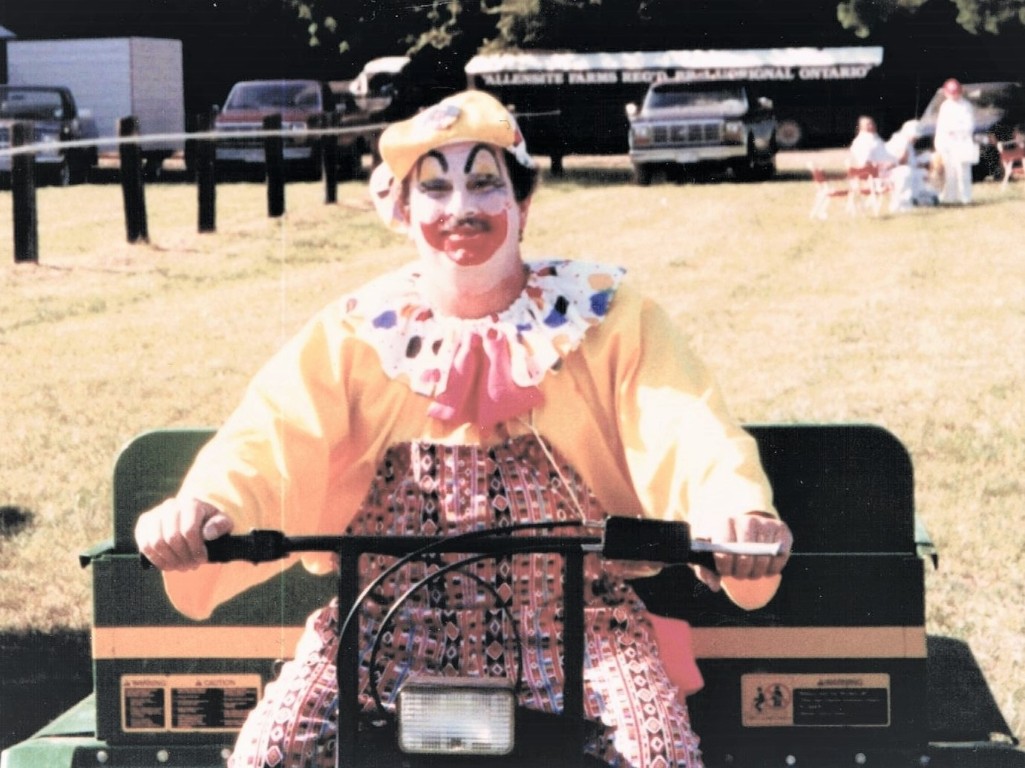
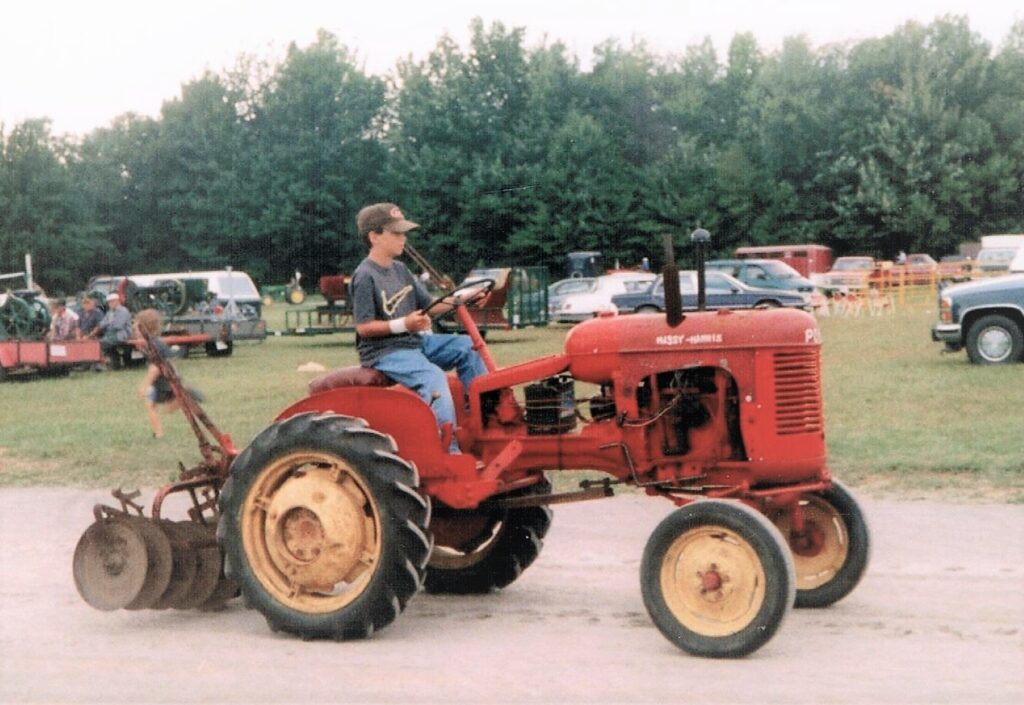
Unfortunately, many records have been lost and there are large gaps in the history of the agricultural society. In 1939, the fair was held on September 26th and 27th, Tuesday and Wednesday; the weather was wet and rainy but cleared for the evening show, with a better crowd (from the personal diary of Pearl Scott). This would indicate a busy farming community with many people in the immediate area.
1867 – James H. Molloy
1908 – John Angus MacLeod
1908 – 1924 – Unknown
1925 – 1926 – George A. Ryan
1927 – 1928 – Rev. H.M. Beach
1929 – 1940 – Dr. J. H. Macintosh
1941 – 1942 – W. J. Muir
1943 – 1944 – D.J. Clemens
1945 – 1946 – Clifford Ryan
1947 – 1948 – Earl G. Wilson
1949 – Walter Ryan
1950 – John Pepper
1951 – 1952 – W.P. Muir
1953 – Guy Reid
1954 – Clifford Ryan
1955 – Wray Scott
1956 – W.J. Wert
1957 – 1958 – Eldon Ray Reid
1959 – 1960 – Vernon Surch
1961 – 1962 – W. P. Muir
1970 – 1972 – Lyle Wilson
1973 – 1974 – George Wilson
1975 – 1979 – Gregory Ryan
1980 – Murray Wilson
1981 – 1983 – Orville Wilkes
1984 – 1985 – Anne Kerr
1986 – 1987 – Eldon Ray Reid
1988 – 1990 – John Clemens
1991 – 1992 – Diane Ryan-Shane
1993 – 1994 – Elsa Stewart
1995 – 1996 – Catherine Clemens
1997 – 1998 – Guy Shane
1999 – 2000 – Ken Wilkes
2001 – 2002 – Claire Smith
2003 – 2005 – Margaret Scott
2006 – 2009 – Catherine Clemens
2010 – 2012 – Jennifer Reid Fraser
2013 – 2014 – John Clemens
2015 – 2016 – Jason Clemens
2017 – 2018 – Corina Shane
2019 – 2021 – Tobias Hovey
2022 – 2023 – Jennifer Reid Fraser
2024 – 2025 – Tobias Hovey
July 24, 1926
A committee was set up to build a dining hall.
May 9, 1927
The contract to complete the new building is given to A. Marlin, $550.00.
January 16, 1929
C.J. Ryan and B. Fawcett formed a committee to add two ladies to the directors and to revise the prize list.
1931 Fair
Prizes were to be given for throwing horse shoes. Society was also given permission to appoint 16 directors.
1932 Fair
Admission 35 cents. Decided to give the directors their dinner.
1933 Fair
Admission is reduced to 25 cents for adults, children 15 cents. It was moved that one third of the directors be elected each year. Secretary-treasurer authorized to deduct 25% of all prize money awarded to each exhibitor.
1937
Miss Helen Ryan and Mrs. MacIntosh formed a committee to revise Home Manufacturer and Domestic Classes.
1927-37
To offer $90.00 for trials of speed – 2 classes. Coronation Rosette Ribbon supplied by Ontario Fairs Association – to be awarded to the best dairy herd – won in 1927 by Albert Scott, with a silver cup from T. Eaton Co.
1938
Received a wet weather grant of $81.15.
1939
At the annual meeting Mr. F. Larose explained the aims of the agricultural society classes and benefits from calf clubs for boys. Moved by W. J. Ryan that C. J. Ryan and L. Presley be a committee to canvas for members in order to sponsor a calf club.
1940
A calf club is sponsored by W. J. Ryan and C. J. Ryan.
Forrest Hill is in charge as a leader. A Win The War class to be included in prize list. Junior judging competition – Eric Harrigan in charge.
1942
Gave complimentary tickets to all school children in the area.
1944
Sponsored a field crop competition – Green Mountain Potatoes, and to get more information on oats and possibly have another class.
1947
Changes were made in the way directors were elected to office – four for 3 years, four for 2 years and four for 1 year. Four directors would change every year. No retiring directors were eligible for re-election within the year after retirement. Inquiries were to be made about wiring the hall and constructing a new floor.
Authorized to sign a contract with Hydro Commission for power on the grounds. Inquiries were to be made about moving the dining hall over the exhibition hall. Purchased chairs from Mrs. Scott for $3.00 and a piano from Mr. Laframboise for $25.00. (This was a grand piano).
1949
It was moved that a ticket house be built. Mr. Campeau was to be asked if he would do the job.
All exhibitors were to be members of the society.
1950
Efforts were to be made to organize a calf club with W. J. Ryan as a leader. Mr. Millette is the agricultural representative. Tickets were to be sold on a refrigerator and a vacuum cleaner.
Three thousand books of tickets were ordered, five tickets per book for $1.00 or 25 cents per ticket.
1958-59
Materials were purchased from the Moose Creek Recreation Society to put an addition on the show hall. The material originally came from homes taken down when the St. Lawrence Seaway was built. Two barns were also added around this time. The barns were taken down in the winter and materials transported to the grounds by teams and sleighs.
1965
A Centennial Committee was set up to find funding for new gates to be built at the west end of the property. This project would be completed for 1967. In June 1965, a committee was formed to get new showcases for the cooking, etc. Members were Ella Muir, Margaret Scott, Stuart Scott, Bert Fawcett and Gregory Ryan. On August 19, two units were ordered from J.R. Menard Ltd., of St. Isidore, and are still in use.
1967
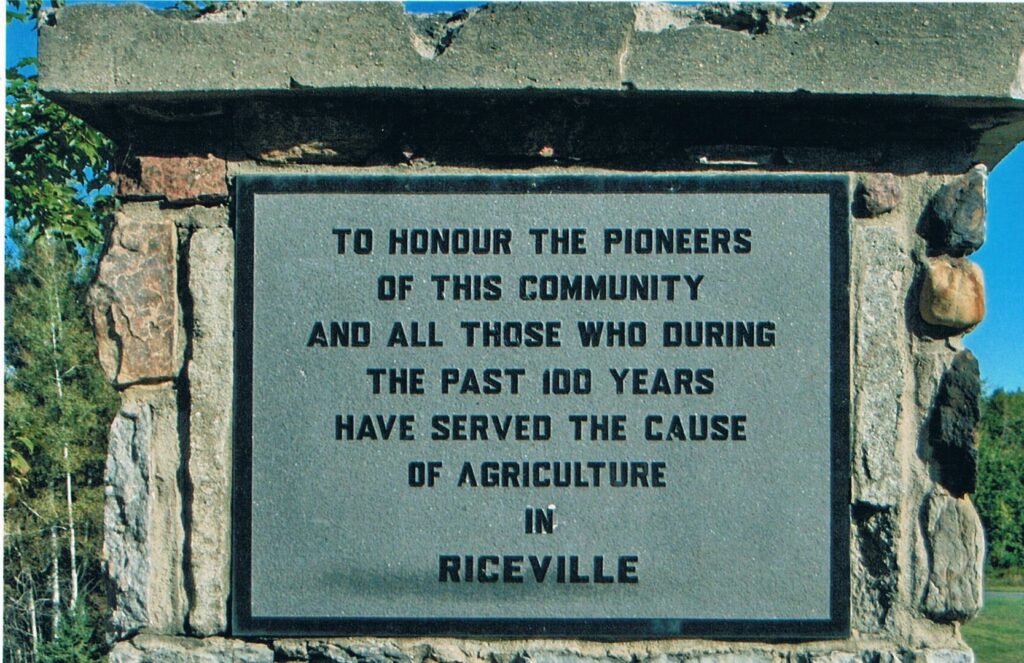
Jim Scott of Fournier was given the contract to build two stone pillars to form the new gate at the west end of the fairgrounds; he, in turn, hired Joe Klute to help with the construction. The fair was held on September 15 and 16. Two bronze commemorative plaques received from the Ontario Association of Agricultural Societies (OAAS) were incorporated into the pillars.
Mr. Fred Lashley, Director of Fairs for the Ontario Department of Agriculture and Food, officially opened the fair and took part in the dedication of the new gates, along with Gregory Ryan, president, and Bert Fawcett, secretary/treasurer. Mr. Lashley congratulated the officers for their contribution to the advancement and service to agriculture in the Riceville district. Mr. Lashley was introduced by Bert Fawcett who had been connected with the fair since 1928; Gregory Ryan, president, extended thanks to the directors.
1970
Bert Fawcett, ‘’Mr. Riceville Fair’’, received an Agricultural Service Diploma from Albert J. Bélanger, M.P.P. for Prescott, honouring 37 years of continuous service as secretary/treasurer.
As members of agricultural societies have rendered service for many years, donating hours of their valuable time in order to have a society that is productive, up to date and a credit to the area, it was felt that there should be some form of recognition for this dedication. Thus the ‘’Agricultural Service Diploma’’ was created to fill this need.
1972
Bert Fawcett resigned as secretary/treasurer. The first liquor permit was obtained for the fair dance on Saturday night.
1973
Jim Fawcett, secretary/treasurer, Marjorie Fawcett, assistant. Held first St. Patrick’s dance at the municipal hall. There was also a memorable trip to St. Polycarpe where the delegates purchased our red folding chairs.
1975
An ice rink was made in the barns. There were broomball and hockey teams and a carnival. A ball diamond was laid out and there were games for several years, organized by Victor Potvin.
This was the first year there was a ‘’Beergarden’’ at the fair.
1980
Fair status was upgraded from a ‘’C’’ to a ‘’B’’ fair. This meant we were now eligible for federal grants and could expand the prize list to cover more cattle, sheep and 4-H classes.
Three sheep classes were added, as well as a sanctioned goat show.
1982
The fairgrounds were tile-drained, after some very wet weather the year before.
1983 & 1984
Held a carnival at the municipal hall in March with a St. Patrick’s dance in the evening.
1984
First lady president – Ann Kerr. Horse racing was revived, not at the fair, but on a lovely warm Saturday afternoon in early July.
Again, success was due in part to volunteer help given by Doug and Lynne Robillard.
1988
Major repairs were undertaken on the show hall. New siding was installed, roof repaired (again), floor levelled and straightened, new cement step and a ramp built.
1989
New lighting in the show hall.
1990
Open-sided show barn, ready for July harness races. Our first ‘’horse pull’’ was held on Friday night at the fair.
2023
More power was brought to the exhibition hall, and new lights were installed on the exterior. RAS hosts their first Holiday market & bake sale at the Caledonia Community Centre in St. Bernardin.
2025
Tile drainage is installed in our parking lot area by Lapointe Drainage & Pasco Excavation.
Starlink internet is added to our fairgrounds!
NEW! Educational Barn & Sample Field Plots are added to our fair.
sept 20 2025
The Riceville Agricultural Society partners with Ride for Dad for the first year of their Eastern Counties bike rally. The fairgrounds is the final stop of their event.
Sept 28 2025
The Riceville Agricultural Society, along with the Local Agricultural Community, the Vankleek Hill Agricultural Society, and Elsa & Tim Stewart, worked together to put on a Car Rally with all funds going to the Maxville Manor redevelopment
Nov 2025
The grounds get an upgrade! We created a “Food Court” area on the North side of the Exhibition Hall to allow more food vendors to all be in one place. The Office is moved to the South side of the hall.
Jan 2026
The new owners of a Community Centre! Proudly operated by the Riceville Agricultural Society, the Fournier Community Centre has been reintroduced as the RAS Centre. We are committed to maintaining a warm and inviting space for our community.